
Types of Bathroom Wall Materials
Picking the right bathroom wall materials is vital. You need both good looks and lasting strength in a damp space. Think about durability, how well it handles water, how easy it is to clean, and what installation takes. Design options and overall cost also matter a lot.
Many choices exist – from classic tiles to today’s panels. Each offers different upsides for bathroom walls. You can find materials like acrylic panels, PVC panels, marble, stainless steel decorative panels, stone resin panels, and even special wood shower walls. These let you mix practical needs with strong design.
Ceramic and Porcelain Tiles
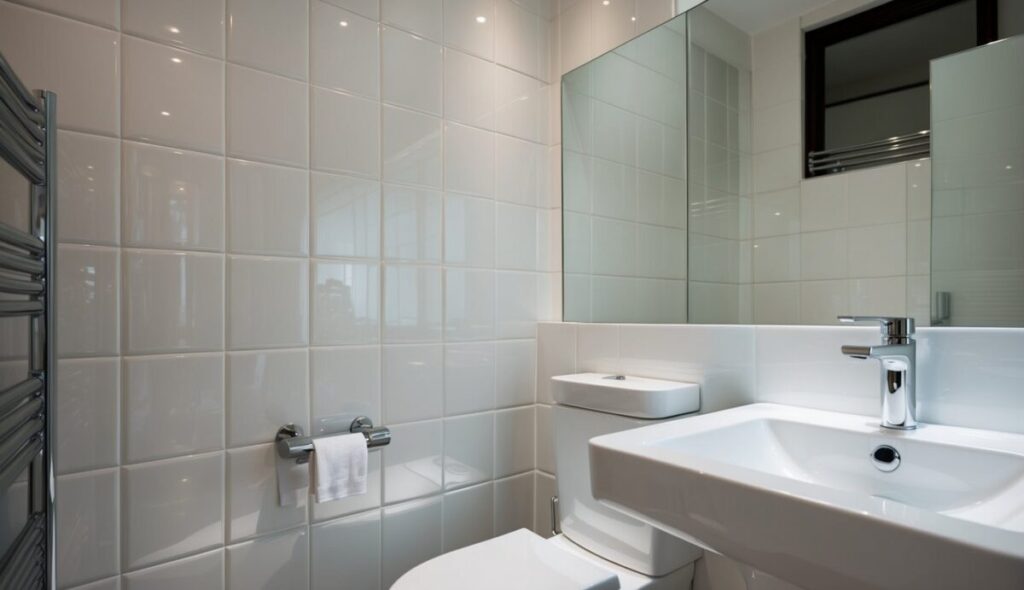
People love ceramic and porcelain tiles for bathroom walls. They hold up well, block water, and clean up easily. Ceramic tiles are a classic, common pick, offered in many styles and colors. Porcelain tiles are even tougher. They pack a dense, non-porous surface, making them very water-resistant – that means good stain and scratch protection.
Both types of tile shed water, perfect for wet spots. Cleaning them is simple, but watch out for grout lines – they need regular upkeep to stop mold. Putting them in can take a lot of work.
Natural Stone Tiles
Marble, granite, travertine, and onyx tiles bring a luxurious, timeless style to any bathroom. These natural stone options are quite tough and add real value to a home. Still, natural stone is porous. It needs consistent sealing to stop stains and moisture from soaking in.
Stone tiles are heavier and cost more too. This may require stronger walls to support them. Onyx tiles work especially well in high-end bathrooms, particularly for shower walls. Their unique look makes them stand out.
Acrylic and Fiberglass Panels
Acrylic and fiberglass panels make for light, waterproof walls. They are simple to clean, strong, and cheap – perfect for wet spots like showers. These panels look smooth and go up fast, a real plus for anyone on a budget. They block water well, but you won’t find many design choices compared to other materials.
PVC Wall Panels
PVC wall panels work well in bathrooms. They cost little, install easily, and resist moisture. These panels are waterproof, light, and strong. They offer good insulation too, helping stop mold and mildew from growing. You can find them in many colors and designs. Cleaning is simple – just soap and water. They are cheap and versatile, but they scratch and dent easily.
Solid Surface Materials
Solid surfaces bring luxury and practicality to bathroom walls. These materials look seamless, need little upkeep, and offer custom designs. They can also imitate real stone without the usual high cost or constant care. Solid surface panels are priced reasonably. Their smooth finish and easy cleaning give bathrooms a modern touch.
Glass Shower Walls and Panels
Glass shower walls and panels fit well with modern, minimalist designs. They look sleek, reflect light, and can make rooms feel bigger. Glass fights off water and stains, making it easy to clean. But these panels cost a lot, need professional setup, and still require frequent cleaning to avoid water spots and streaks.
Moisture-Resistant Paint
Bathroom walls do well with moisture-resistant paint – it’s a smart, affordable choice. This kind of interior paint often has mold-fighting ingredients, perfect for damp spots. It’s not as tough as some other materials in very wet areas, but special bathroom paints help fix that problem. Plus, you can pick from so many colors, making it easy to customize your space.
Vinyl Wallpaper
Vinyl wallpaper makes a great pick for bathroom walls. It’s functional, waterproof, and doesn’t cost a lot. This wallpaper stops moisture and comes in many designs – patterns and colors are both available.
But there are downsides. Vinyl wallpaper offers flexible design and low cost, true, but it won’t last as long as ceramic tiles. With steam, it can peel off over time. So, expect a shorter life than other, more permanent wall options.
Wood Paneling and Beadboard
Wood paneling and beadboard add warmth and texture to bathroom walls, perfect for traditional or rustic looks. These materials – beadboard and shiplap especially – need good sealing. This stops moisture from causing damage. Some woods, like teak and cedar, naturally repel water. Often, beadboard goes on the lower half of a bathroom wall.
Tileboard
Tileboard looks like ceramic tile but costs less. You get large panels of it, which makes installation easy and covers bathroom walls for a good price. The board has a moisture-resistant coating. Still, all seams need a proper silicone caulk seal – this stops swelling if water gets behind them.
Comparing Bathroom Wall Materials for Different Areas
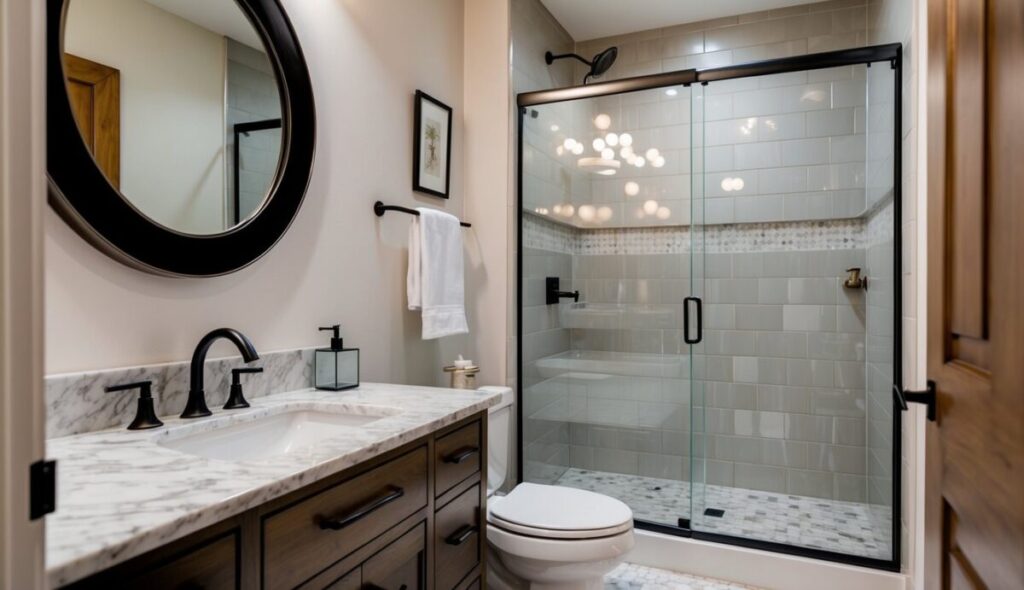
Picking the best bathroom wall material means looking at your specific needs, how much you want to spend, and what style you like. Every material has its own pros and cons, especially when it comes to how long it lasts, how well it handles water, how easy it is to clean, and the installation process. Its look and price also matter. Considering these points helps you choose materials that will hold up and look good – a key part of any well-designed bathroom.
Best Materials for Shower Walls
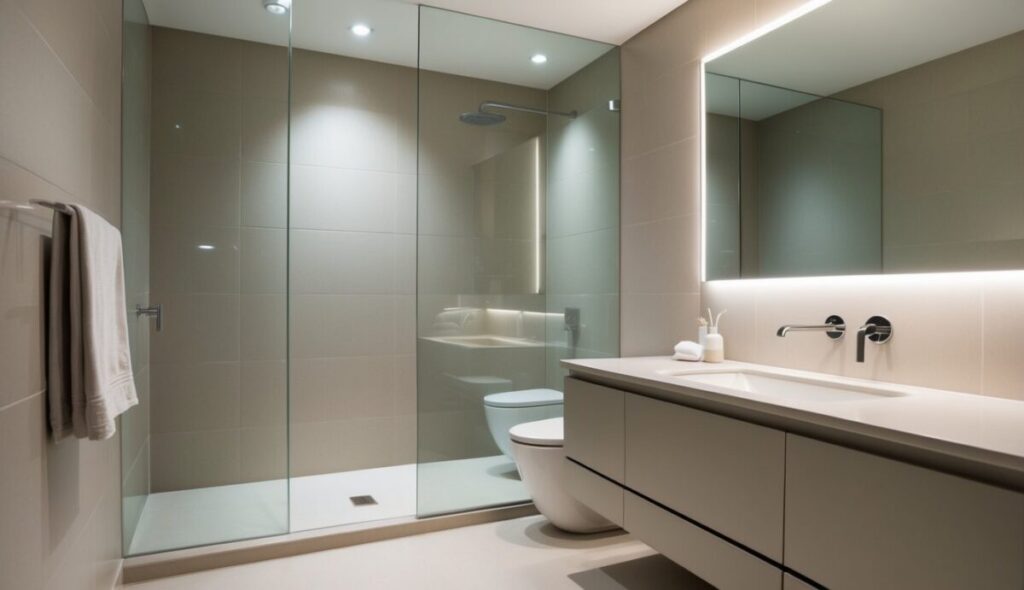
Shower walls need tough, waterproof, and simple-to-clean materials. They face constant water and humidity. Porcelain tiles lead the pack here. They’re dense, non-porous, and hold up well against moisture and stains. Acrylic and PVC panels also work – they resist water and last a long time.
Want a fancy look? Natural stone, like onyx, gives a pure luxury feel. Solid surfaces offer a smooth, unbroken finish. Every shower wall installation needs a waterproofing system. It’s not optional.
Best Materials for General Bathroom Walls

You have many options for bathroom walls that look good and stand up to moisture. Vinyl wallpaper offers a vast array of styles, and it resists water well. Wood panels or tiles designed to look like wood add warmth and texture, but you will need to seal them right to keep out moisture.
Moisture-resistant paint with mold inhibitors costs less. However, it isn’t as tough as other choices in a very humid bathroom. Glass panels give a sleek, modern feel, reflecting light and making the room seem bigger. Cement tiles or fake concrete finishes create an industrial style, but again, sealing is key. For endless design choices – colors, patterns, textures – grab some mosaic tiles.
What Factors Influence Bathroom Wall Material Selection?
Choosing bathroom wall materials depends on several things: how long they last, how well they resist water, ease of cleaning, and the overall look. What you plan to use the bathroom for, your style, budget limits, and how much upkeep you expect are key. Acrylic sheeting, for instance, offers both toughness and value. Your material choices shape the bathroom’s look and how well it works after an upgrade or remodel. Think about these points, and your chosen materials will fit your design, stay clean, and provide good value over time.