
- What Does Stucco Maintenance Involve?
- How to Visually Inspect Your Stucco for Damage
- How to Clean Stucco Exterior Walls
- How to Repair Minor Stucco Damage
- When to Repaint and Reseal Stucco
- How to Protect Stucco from Moisture Damage
- When to Hire a Stucco Contractor for Repairs or Remediation
- Similar posts:
What Does Stucco Maintenance Involve?
Keeping stucco in good shape means following certain steps to protect its strength, look, and usefulness. Done right, stucco can last for decades – up to 50 years. It’s not hard, nor is it expensive. This means cleaning it annually, and resealing or repainting it every few years. Also, checking it once a year helps catch small issues early.
This hands-on method stops little problems from turning into big, pricey structural damage. It also keeps your home looking great and boosts its curb appeal. Good upkeep helps stucco last and look good, guarding it from harm and making it work as if new.
What Is the Recommended Stucco Maintenance Schedule?
Maintaining stucco means taking specific steps. You’ll need to repaint and reseal it every few years; this freshens the look and adds protective layers. Small repairs, like fixing hairline cracks or chips, need fast attention when they pop up. This keeps bigger problems at bay and helps you avoid a complete replacement. A good schedule makes sure the stucco lasts and keeps the weather out.
How to Visually Inspect Your Stucco for Damage
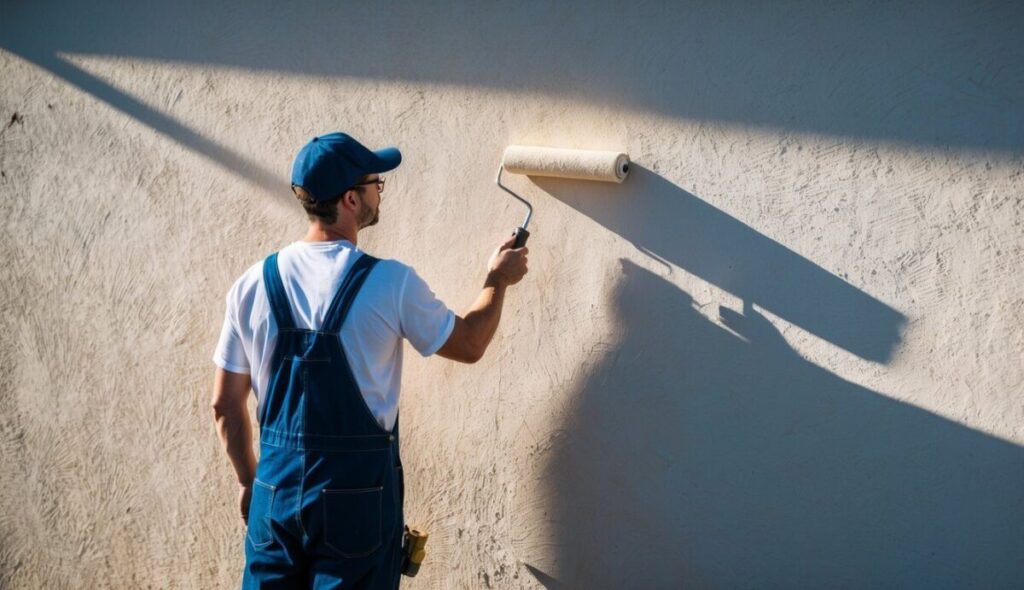
Checking stucco for damage each year is vital. Look closely for cracks, crumbling, mold, or holes. These are common signs an installation could be failing. Watch for hairline cracks – fine lines on the surface – along with chips, gouges, and any bulging areas. Early checks catch small problems. This stops them from growing into bigger issues and damaging what’s underneath. Fixing cosmetic damage or spots where water might get in protects against moisture and structural decay. Consider a professional home inspection for a complete review.
How to Clean Stucco Exterior Walls
Keeping stucco walls clean makes them look better and stops them from falling apart. For basic cleaning, mix a mild detergent solution and use a soft brush.
If you have tougher spots – algae, mold, or mildew – try a gentle bleach solution or TSP, then rinse everything well. Low-pressure washing works too, or a power washer set on low. Just be careful not to hurt the porous stucco. Good drainage and smart landscaping will keep dirt from building up.
How to Repair Minor Stucco Damage
Fixing small stucco damage keeps bigger problems from starting. Fine hairline cracks need caulking. Bigger cracks, though, call for a pre-mixed stucco compound – something like Rapid Set Stucco Patch or an acrylic patch. If your stucco is chipped, flaking, or gouged, first apply a bonding agent. Then, use a patching compound or stucco repair mortar.
Always clean the area well before you start any repair. When you need to drill into stucco, use a masonry drill bit. Think about options that don’t need drilling, like stucco tape, to reduce damage. After the repair, make sure the new stucco matches the old texture; this creates a seamless look.
When to Repaint and Reseal Stucco
When repainting, grab elastomeric paints or breathable coatings. They bridge small cracks and let moisture escape – this stops bubbling or flaking. UV-resistant paints keep colors true and offer protection for a long time. Make sure the surface is clean and dry first. Consider the weather, too, before you start.
How to Protect Stucco from Moisture Damage
Protecting stucco from moisture damage is crucial for its longevity, as trapped water leads to mold growth, structural issues, and pest intrusion. Ensure proper drainage around the foundation and maintain clean, functional gutters and downspouts. Landscaping should direct water away from the walls.
Regularly inspect for clear weep holes and weep screeds, which are essential for moisture management and drainage.
Reseal stucco every few years with a breathable sealant and use breathable paints to prevent water damage. Promptly repair any cracks or openings to avoid water intrusion and potential structural damage.
Avoid drilling into stucco where possible. These measures are especially important in climates with high humidity and rainfall.
When to Hire a Stucco Contractor for Repairs or Remediation
Call one for repairs or remediation when damage goes beyond small cracks, or if you suspect hidden issues. Professionals are essential for major moisture damage, bulging, or when full remediation is needed. Remediation means completely taking off the old stucco, fixing any wall damage underneath, and then correctly putting on new layers. This includes the scratch coat, the brown coat, and the final finish coat.
Stucco contractors – they really know their stuff – pinpoint and fix complicated problems. This ensures correct application and lasting durability. They also offer dustless sandblasting for resurfacing or tough stains. For synthetic stucco, also called EIFS (Exterior Insulation and Finish System), you need specialized contractors.
A professional also ensures traditional plaster is repaired and applied correctly.