
- What Is Drywall?
- What Is Drywall Made Of?
- How Did Drywall Develop?
- How Is Drywall Manufactured?
- Where Is Drywall Used in Construction?
- What Are the Advantages of Using Drywall?
- What Are the Disadvantages and Challenges of Drywall?
- What Are the Different Types of Drywall?
- How Is Drywall Installed and Finished?
- How Is Drywall Repaired and Maintained?
- What Is the Environmental Impact of Drywall?
- Similar posts:
What Is Drywall?

Drywall goes by many names: plasterboard, wallboard, gypsum board, or sheetrock. It’s a common material for inside walls and ceilings. The panels are mostly calcium sulfate dihydrate (gypsum), often with other things mixed in, all pressed between thick paper sheets. This material changed construction. It’s convenient, efficient, and versatile, much better than old mortar or plaster.
You’ll find drywall in homes and businesses. Why? It installs fast, lasts a long time, and fixes easily. It also resists fire, which helps slow a blaze and gives people more time to get out safely.
What Are Common Names for Drywall?
Drywall goes by many names. You might hear it called dry lining, gib board, or even buster board. Some people say turtles board, slap board, or custard board. It’s also known as a gypsum panel or gyprock. In Canada, for example, most just call it Gyproc.
What Is Drywall Made Of?
Drywall is mostly gypsum, a sulfate mineral. Calcium sulfate dihydrate, to be exact, makes up 70% to 90% of each sheet. This gypsum core sits between two thick sheets of heavy paper or fiberglass mats.
The paper facings can be 10% of the drywall. They often come from cellulose fibers, usually recycled materials like old newspapers.
Small amounts of other things go into drywall to make it better. These include:
- Plasticizers: they make it easier to work with,
- finely ground mica crystal: this helps it set faster,
- EDTA, starch, or other chelating agents: these improve how it works overall,
- anti-mildew agents: boric acid is one example,
- wax emulsion or silanes: these cut down on water absorption,
- potassium sulfate: it boosts certain properties,
- fiberglass: added to the gypsum core in fire-rated Type X drywall, it makes the sheet more fire resistant.
How Did Drywall Develop?
Augustine Sackett and Fred L. Kane invented drywall in 1890. They put plaster between four layers of wool felt paper. Later, in 1916, the U.S. Gypsum Company (USG) improved it, calling it “Sackett Board.” At first, they sold it as small, fireproof tiles.
By the 1920s, drywall looked much like it does today: a single layer of pressed gypsum plaster between two sheets of thick paper. Its edges were wrapped, and it had paper facings. This design offered fire resistance and made installation faster, replacing old wall materials like lath and plaster. Builders didn’t like it at first. But after World War II, with so many new homes needed, drywall became the standard.
How Is Drywall Manufactured?
Making drywall starts with a wet mix. This mix holds gypsum plaster and other things.
Workers put this wet gypsum core between two sheets of heavy paper or fiberglass mats. The core sets after the board forms. Then, the board goes into a big drying chamber, where it gets hard and strong. The paper outside often uses 100% recycled material – mostly old newspapers. Inside, the cores can have 90% to 95% recycled stuff, even old drywall. Synthetic gypsum – from cleaning industrial pollution – is also a common part.
Where Is Drywall Used in Construction?
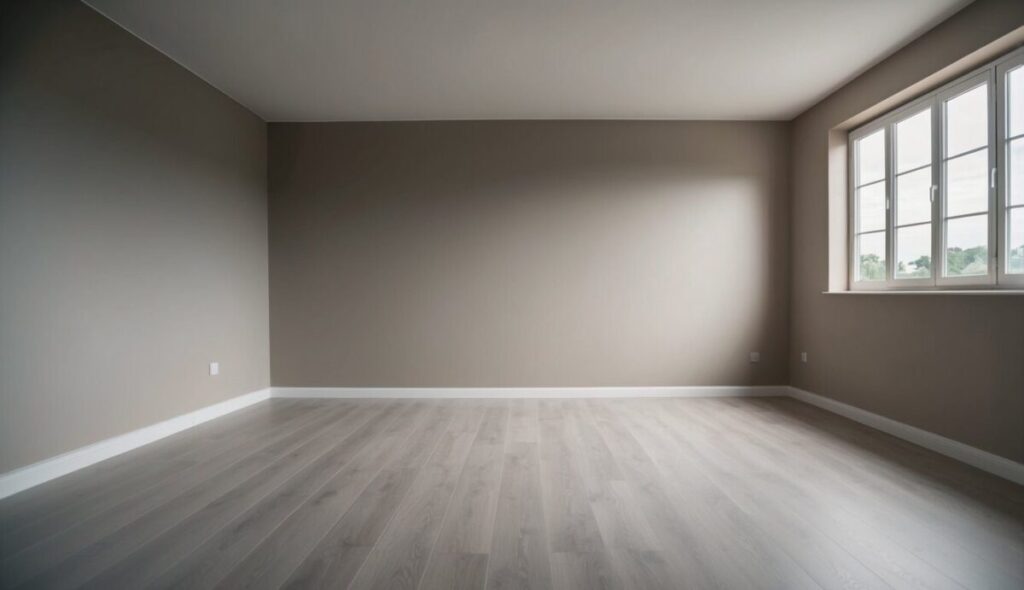
Drywall is a common material for inside walls and ceilings in homes and businesses. It also forms design elements like eaves and arches. In commercial spaces, drywall covers columns, hides steel beams, and finishes masonry walls above the ceiling line. Drywall comes in different thicknesses – 1/2 inch and 5/8 inch are typical – depending on what you need it for.
What Are the Advantages of Using Drywall?
Drywall brings many good points to construction. For one, it goes up fast. A skilled crew can hang drywall in a whole house in just a day or two. That’s much quicker than old plaster, which used to take weeks. This speed cuts down on labor costs, making drywall a cheaper way to build.
It’s simple to fix. Its fire resistance comes from the water trapped inside its gypsum core. When a fire starts, the gypsum lets out water vapor and soaks up heat. This process slows how fast heat moves through walls. Because of this, drywall gets a fire-resistance rating. It acts as a fire barrier, meeting all building codes.
Drywall also works with many finishes. You can paint it or put up wallpaper.
What Are the Disadvantages and Challenges of Drywall?
Drywall has its good points, but it also comes with several problems. One big issue is how easily it takes on moisture. Regular drywall soaks up water, which then causes mold, structural damage, and decay. Leave it wet too long, and the gypsum can turn into a soft, gooey paste. Termites and honeybees also like to damage the paper facings.
The material itself is fairly soft. This means it dents or punctures easily, often needing quick repairs. Poor installation can leave you with visible seams, cracks, and bumpy surfaces. Drywall screw pops are common too – screws become visible because the building settles, moves, or due to humidity changes.
Cutting and sanding drywall creates fine dust. This dust holds known carcinogens like formaldehyde, acetaldehyde, and crystalline silica. These pose health risks, so you need good ventilation and dust control – always wear a safety mask.
After Hurricane Katrina, defective Chinese drywall caused major headaches. It gave off sulfurous gases, creating bad smells, health issues, and corroding metal. This led to new rules for testing volatile sulfur compounds. And while waste wallboard from building sites is 100% recyclable, getting rid of it can still be a challenge.
What Are the Different Types of Drywall?
Drywall comes in many forms, each designed for a specific job.
Regular drywall, often called White Board, is the most common kind. You’ll usually find it in 4×8 foot panels, with thicknesses ranging from 3/8-inch to 1-inch.
Moisture-resistant drywall – Green Board – has a surface coated with wax or chemicals. This coating helps it resist moisture and mildew. It’s perfect for humid spots like kitchens, bathrooms, and laundry rooms.
Fire-resistant drywall, known as Type X, contains fiberglass in its gypsum core. This fiberglass boosts its fire rating, making it a better fire barrier. Gypsum Firecode C offers another fire-rated choice.
Soundproof drywall cuts down on sound moving through walls. How does it do this? Builders use several methods: layering multiple drywall sheets, adding steel studs, spacing studs wider, or even double studding. They might also add insulation like glass wool batt or resilient channels. These steps improve Sound Transmission Class (STC) ratings. Soundboard, which has wood fibers, and laminated drywall with damping polymers also make rooms quieter.
Blueboard drywall has a blue face paper. This paper bonds well with a skim coat or a thick plaster finish. It resists both water and mold.
Paperless drywall uses a fiberglass face instead of paper. This makes it very mold-resistant.
Lead-lined drywall protects against radiation. You’ll find it in places with radiological equipment.
Foil-backed drywall works as a vapor barrier. It stops moisture from getting through walls.
EcoRock offers an environmentally friendly drywall choice. It’s made from recycled materials – things like fly ash, slag, and kiln dust. Enviroboard, another green option, uses recycled agricultural materials.
How Is Drywall Installed and Finished?
Putting up drywall takes a few steps. On big commercial jobs, “hangers” often do one part, and “tapers” do another. First, workers cut the panels to size. They score the finished side with a utility knife, snap the sheet, then cut the paper backing. For small openings – like for outlets or light switches – they use a keyhole saw, an oscillating multi-tool, or a high-speed rotary bit.
Drywallers – the hangers – then attach the drywall to the building frame with nails or screws. They often add drywall adhesive too; this helps stop screws from popping out later. Screws must go in at just the right depth, without tearing the paper. Workers use clips, stops, or wood/metal blocking for extra support.
Once the drywall is up, the finishing starts. Tapers – sometimes called mud men or the float crew – tape the joints between sheets. They use either paper or fiber mesh tape. Then, they spread joint compound – “mud” – over the tape and screw heads. This “mudding” usually takes several coats. After it dries, they sand the compound smooth. This removes any visible seams, screw holes, or bumps. Sanding creates fine dust, so workers need safety masks and good ventilation.
Drywall finishes range from level 0 (unfinished) to level 5 (the best). A skim coat or veneer plastering – putting finish plaster over blueboard – gives the highest quality look. Common tools include:
- utility knives,
- keyhole saws,
- oscillating multi-tools,
- rotary tools,
- drywall trowels and knives.
How Is Drywall Repaired and Maintained?
Drywall is easy and cheap to fix. Dents, holes, and screw pops are common problems. You can fill small holes and dents with joint compound, then sand them smooth once dry.
But what about bigger issues? If drywall has major damage, bad mold, or sits wet for more than 48 hours, you should replace it. Quick professional help can save it from full replacement if water exposure is short. To fix screw pops, just set the screws right – maybe add some drywall adhesive.
Patching drywall is faster and simpler than patching plaster. Keep an eye on moisture to stop mold and rot. This simple upkeep makes drywall both affordable and long-lasting.
What Is the Environmental Impact of Drywall?
It’s a mix of good and bad. A major issue is waste: up to 12% of drywall gets wasted during manufacturing and installation. For years, this waste just piled up in landfills. But today, people see drywall as easy to recycle and sustainable.
Drywall cores often contain 90% to 95% recycled material, including old drywall itself. The paper facing? That’s usually 100% recycled paper, often from old newspapers. Some manufacturers even collect waste wallboard to make into new sheets.
Recycled drywall finds three main uses:
- new drywall production,
- an ingredient in Portland cement,
- a soil conditioner for farms.
Crushed drywall gives plants calcium and sulfur, boosting crops like peanuts, potatoes, and corn. It can even help salty soil. Synthetic gypsum, such as flue-gas desulfurization (FGD) gypsum, also plays a role. This FGD gypsum comes from industrial pollution controls that capture sulfur dioxide emissions. This reduces the need for mined gypsum, though some worry about mercury release from FGD gypsum. Products like EcoRock use recycled fly ash, slag, and kiln dust, aiming for zero emissions.