
- What Is Wood Paneling?
- What Is Drywall?
- Cost Comparison: Wood Paneling vs Drywall
- Installation Process: Wood Paneling vs Drywall
- Aesthetics and Design Flexibility
- Durability, Maintenance, and Repair
- Performance Features: Fire Safety, Insulation, and Sound
- Environmental Impact Comparison
- Making Your Decision: Choosing the Right Wall Material
- Similar posts:
What Is Wood Paneling?
Wood paneling covers walls, using natural or engineered wood. It adds depth and character, also making rooms quieter and warmer. You can find solid wood slats, acoustic slat panels, 3D designs, old barnwood, and even peel-and-stick options.
Modern panels make a room look better – they add texture and fit other decor. They create a unique focal point. This material lasts a long time and is easy to care for. Tongue and groove wood paneling can go up with nails, glue, or both. Older paneling might look dated, but paint or updates can fix that. Some wall panels come from renewable sources, which is better for the planet.
What Is Drywall?
Gypsum board, or drywall, builds most interior walls and ceilings. It’s simply calcium sulfate dihydrate (gypsum) pressed between two thick paper sheets. People like it for its fire resistance and how it absorbs sound – useful qualities for any home. Drywall costs little money and takes paint or wallpaper well. But watch out for moisture; it molds easily.
Cost Comparison: Wood Paneling vs Drywall

When renovating a home, comparing the cost of wood paneling against drywall is critical. Wood paneling materials usually cost more – that’s a given. But it installs easily, often bringing down labor costs, particularly if you do it yourself.
Drywall materials are cheaper per square foot. Even so, it often racks up higher labor costs because it’s harder to put up. The better deal depends on weighing material expenses against labor and how much care it will need later on.
What Are the Material Costs for Wood Paneling?
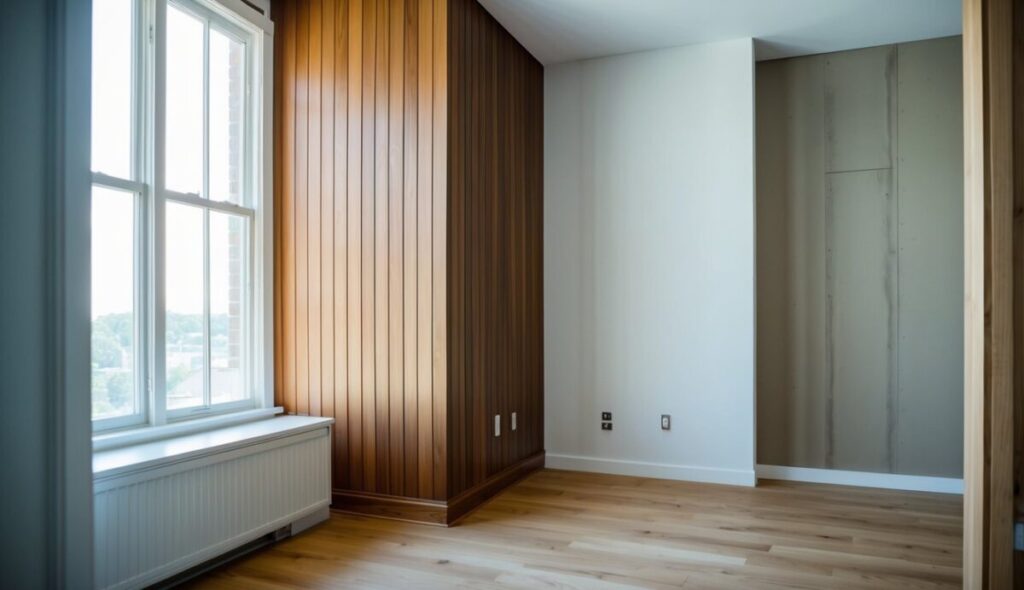
Wood paneling costs anywhere from $2.50 to over $7.00 per square foot. The price changes with the wood type, finish, and design. For example, solid wood slats, acoustic panels, and prefinished options all carry different price tags. Reclaimed wood, a greener choice, also plays a role in the final cost.
How Do Labor Costs Differ for Wood Paneling and Drywall Installation?
Labor costs for putting up wood paneling or drywall differ quite a bit. You could pay nothing for wood paneling if you do it yourself. Hiring pros, though, usually runs $2.00-$4.00 per square foot. That kind of installation often wraps up in a day – or less.
Drywall needs more work. Its weight means you need at least two people to hang it. Expect to pay $1.50-$3.00 per square foot for labor here. The entire drywall process – measuring, cutting, gluing, screwing it into place, adding joint compound, then sanding – typically takes 2-4 days.
What Are the Long-Term Cost Implications?
Think about the long-term costs of upkeep, how long things last, and energy use. Wood paneling, though it costs more upfront, saves money over time. It holds up better and needs less care. Drywall costs less to start, but you’ll pay more for frequent repainting and repairs – it just isn’t as tough.
Homes with wood paneling also stay warmer or cooler, cutting heating bills. Oddly enough, switching from wood paneling to drywall can raise a home’s value. This suggests that drywall offers a good long-term return on investment in specific situations.
Installation Process: Wood Paneling vs Drywall
Wood paneling and drywall installation differ a lot – in how hard they are, how long they take, and how much work they need. You nail and glue wood panels. Drywall needs many steps, like mudding, taping, and sanding.
How Easy Is Wood Paneling to Install?
Putting up wood paneling usually goes faster than drywall. One person often handles the job alone. You just spread adhesive on the panels, press them onto the wall, and then nail them down. That quick setup helps many homeowners, especially those doing the work themselves.
What Does Drywall Installation Involve?
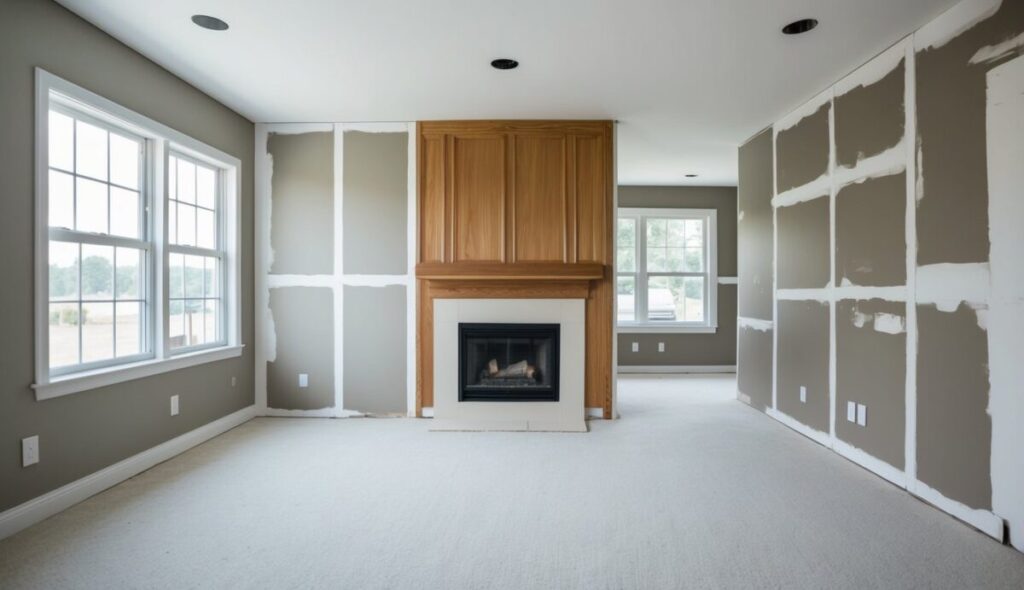
Putting up drywall takes several steps. It is hard work and needs at least two people, largely because the material weighs so much. First, you measure and cut the gypsum board sheets so they fit the wall. Then, you put on adhesive and screw the sheets to the wall studs. Once the drywall is up, you cover the seams and screw holes with joint compound. Finishing touches include sanding, priming, and then either painting or adding texture.
Is DIY Installation Feasible for Both Materials?
You can install both wood paneling and drywall yourself, but one is harder. Drywall takes more work. It usually needs at least two people because the sheets are heavy. Finishing drywall calls for mud, tape, and sanding. New DIYers often struggle with these steps – the results can be pretty disappointing.
Aesthetics and Design Flexibility
Wood paneling and drywall offer key differences in looks and design. Both materials provide distinct visual effects and creative possibilities for homes. They meet varied preferences and needs. Wood paneling feels warm and adds texture. Drywall gives you a blank slate for many finishes.
How Does Wood Paneling Contribute to Interior Design?
Wood paneling makes interiors feel deeper, richer, and more distinctive. It helps rooms really stand out. Today’s options – think solid wood slats or 3D panels – create a dynamic look. This material can build a rustic theme or fit right into modern designs.
What Design Options Does Drywall Offer?
Drywall means big design options. Its smooth surface provides a neutral base, ready for any finish you pick. You can paint it, hang wallpaper, or add texture to match a room’s style. Popular textures like Orange Peel, Knockdown, or Popcorn add real character and visual interest.
Durability, Maintenance, and Repair
How well do wall materials last? Durability, upkeep, and repairs all matter a lot for how long a wall performs and what it costs over time. Wood paneling and drywall offer completely different traits here. These differences make one better than the other for certain rooms or for what a homeowner might prefer. Knowing these points helps people pick the right material for their home projects.
How Durable Is Wood Paneling?
Wood panels last a long time, holding up well to daily use. Many new wood panels get special treatments. These protect against UV light, warping, and scratches. But wood can still mold, mildew, or rot in damp places. That happens if it’s not sealed right.
What Maintenance Does Wood Paneling Require?
Wood panelling needs dusting, and an occasional conditioning helps it look its best. When serious scratches or damage happen, you can simply swap out individual slats or boards. This offers a clear benefit over drywall. You’ll need to reseal the wood regularly in humid conditions; this stops moisture, mold, mildew, and rot from setting in. Wiping it clean is easy, but if you need to patch it, you’ll have to take out a whole section of the wall.
How Durable Is Drywall?
Drywall is tough, yet fragile. It cracks and dents easily if not handled with care. Unlike wood paneling, it won’t hold heavy items; you’ll need anchors or stud-finders for hanging. Moisture also damages drywall fast, unless it’s sealed or treated with special products like green board or cement board.
What Maintenance Does Drywall Require?
Drywall needs constant repainting and patching. It’s fragile and dings easily, picking up cracks here and there. Painting or wallpapering the surface works, but those finishes demand regular care. Drywall struggles in wet spots, too. High moisture often leads to damage and mold growth. Proper sealing or special boards are a must in those areas.
How Does Repair Differ Between Wood Paneling and Drywall?
Wood paneling and drywall need distinct repair approaches. Drywall fixes blend easily with joint compound and paint, but the material dents without much effort. You cannot patch wood paneling; instead, you must remove a section. But a deep scratch might mean replacing just one slat or board. Wood paneling – unlike drywall, which gets ruined – also dries out well after water leaks.
Performance Features: Fire Safety, Insulation, and Sound
Drywall and wood paneling offer different performance features for fire safety, insulation, and sound. Drywall resists fire better. Its gypsum has water inside, which slows fire spread. This material also blocks sound well, keeping noise from moving between rooms.
Wood paneling is not fire-resistant; it might even make fires spread faster. It also doesn’t block sound as well as drywall, though acoustic slat panels can soak up some noise.
Wood paneling by itself adds no real R-value. But – if you put it over drywall or use solid wood panels – it can make your home more energy efficient. Without drywall behind it, gaps in the paneling can let air in, canceling out any insulation. Wood paneling can still help hold temperatures steady, though, boosting thermal performance.
Environmental Impact Comparison
Choosing wall materials with the environment in mind matters. Making drywall creates a lot of waste. Contrast that with wall panels from sustainable materials – like reclaimed wood or recycled PVC – which are a greener choice. Some wood panels even use renewable resources. This cuts down on environmental impact and fits good building practices.
Making Your Decision: Choosing the Right Wall Material
Choosing between wood paneling and drywall comes down to specific needs. Homeowners weigh budget, what they like, and how they want a room to look and work. Both materials offer pros and cons. Often, using both together gives the best outcome. The decision affects a home’s look, how well it works, and its market value.
When Should You Choose Wood Paneling?
Choosing between wood paneling and drywall means weighing several factors. Pick wood paneling if you want a warm, natural feel, or if you need unique focal points. It also adds texture and improves a room’s look.
This material works well in busy spots where durability and easy upkeep matter most. Wood, especially acoustic slat panels, greatly helps sound absorption in places like home offices or media rooms. It’s also a smart pick for basements – it dries out nicely after getting wet. Think about wood paneling for hybrid homes too, anytime you want a distinct style.
When Should You Choose Drywall?
Pick drywall when you need something affordable, fire-resistant, and good at blocking sound. It gives you a clean slate – easy to paint, wallpaper, or texture to fit any room. It’s a useful, flexible choice for most inside walls and ceilings, giving a current look that can boost your home’s worth. Drywall also insulates well, which saves energy. But watch out: moisture can damage it in humid spots.
Can Wood Paneling and Drywall Be Used Together?
Many people combine materials to get the best from each. Yes, wood paneling and drywall work well together. This mix often creates the best look and function in “hybrid homes.” Drywall gives wood panels a base, allowing different textures and visuals. Drywall also resists fire and insulates sound. Wood paneling, on the other hand, adds warmth and character. You can put paneling over drywall, but installing wood paneling without drywall can cause air to leak in.