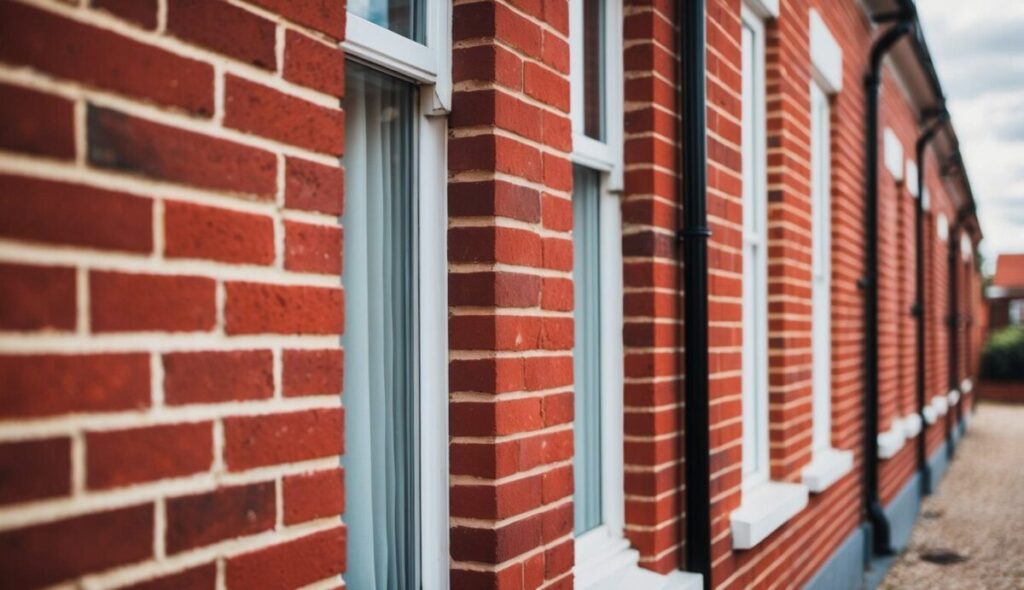
Can You Apply Stucco Over Brick?
Yes, you can put stucco over brick.
More people are doing this, because stucco is so versatile and easy to apply; it just looks good. Stucco – a tough mix of Portland cement, sand, lime, and water – goes on walls and ceilings. It used to go over laths or mesh, but now direct application on brick is catching on. This just means using stucco as a finish coat on a brick wall.
First, check the brick itself. If your brick is fairly flat and solid, with mortar joints 1/4″ to 1/2″ deep, covering it will be easier. But bad application can cause big moisture problems, damaging the brick underneath. This is especially true in colder places, where stucco wasn’t first designed to go.
Old stucco often had lime, water, sand, and natural binders. Today, we use Portland cement and gypsum. Careful prep and proper techniques are key for good adhesion and long life on any building job – new homes, additions, or renos.
What Are the Advantages of Stuccoing Over Brick?

Putting stucco on brick has some big upsides. It looks better, for one, and gives your home a stronger, more energy-efficient shell. You can pick any color or texture for stucco – a real boost to curb appeal.
Aesthetic Transformation and Curb Appeal
Stucco changes brick homes. It gives them a modern finish, smooth and seamless, a real shift from traditional brickwork. Homeowners get many color choices with stucco, so they can update their home’s look without painting. Stucco also takes on different textures and designs. You just can’t do that with bare bricks. This lets you change how a house looks without tearing things down – a great way to boost curb appeal and even raise property value.
Enhanced Durability and Protection for Brick
Stucco makes brick tougher and stronger. It seals out weather, protecting brick from water, wind, and temperature shifts. A stucco coat can help a brick chimney, too, especially if the bricks are spalling or the mortar is falling apart.
Improved Energy Efficiency and Insulation
Stucco adds an extra layer of insulation, making buildings more energy efficient. This material’s thermal resistance is top-notch, keeping inside temperatures steady. Homes stay cooler in summer and warmer in winter, which can cut energy bills. Stucco also seals up gaps and cracks – no drafts, no heat loss. Good insulation means a more comfortable home and bigger savings on heating and cooling costs.
Ability to Cover Existing Damaged Brickwork
Stucco gives an affordable way to hide damaged brickwork. It covers problems such as crumbling mortar and bumpy surfaces, leaving a smooth finish. This means you can update a home without expensive brick fixes. Stucco also helps refresh old brick chimneys – a quick, modern facelift.
Potential Increase in Property Value
Stucco on brick boosts a home’s worth. It gives the exterior a fresh, customizable look, drawing in more buyers. Plus, it needs less upkeep – a big plus for anyone owning a home. Smart homeowners see installing stucco over brick as a good investment.
What Are the Disadvantages and Risks of Stuccoing Over Brick?

Stuccoing over brick has some downsides, despite its benefits. Moisture problems are a big worry, especially if the job is not perfect. Stucco can trap water behind it when not installed right, damaging both the stucco and the brick beneath.
Risk of Moisture Problems and Damage
Stucco over brick poses a big moisture risk. If pros don’t apply it right, or if cracks show up, water gets in. That water then can’t dry, staying trapped between the stucco and the brick. This causes the brick, mortar, and even the stucco to rot. Badly cured layers or missing weep screeds – small drainage devices – make problems worse. You might see spalling, white salt stains, and structural damage.
Common Causes of Cracking After Application
Stucco is a rigid material, and it will crack. Houses settle. The ground shakes – earth tremors are real. Big temperature swings also cause cracks. Bad mixing or application can lead to trouble. Rushing the drying time between coats creates problems. Not enough expansion joints also means cracks. These cracks let water in. That hurts the stucco itself and the brick underneath. Synthetic stucco has polymers. This makes it more flexible and cuts down on cracking in areas where temperatures change a lot.
Challenges During Stucco Installation on Brick
Putting stucco on brick has its struggles. It takes a lot of careful work, demanding skill and sharp eyes. Good adhesion remains key, so the surface must be clean and the right bonding agent used. Sometimes, a metal lath is needed for better stability. You also need to apply it in three layers – a scratch coat, a brown coat, and a finish coat.
Each coat has to dry and cure fully. If you rush it, the layers won’t cure right. This raises the risk of damage and bad adhesion. Choosing the correct stucco matters too, especially types made for outside use, water resistance, or with fiber added.
Difficulty in Reverting to Original Brick Facade
Taking stucco off a house to show the original brick underneath is tough and risky. The stucco removal itself can hurt old bricks, particularly if installers put it right on the brick without any protective layers. This job needs skilled pros to avoid ruining the masonry. When stucco covers brick on historic homes, it hides their original look and design – making the choice to strip it a complicated one, mixing old building preservation with cost concerns.
Ongoing Maintenance Requirements for Stucco
Stucco needs regular upkeep to look good and work right. Walk around it often. Inspections will spot any cracks or damage. Fix these spots quickly to keep problems from spreading or letting in water. A protective sealant wards off moisture and water damage. Weather-resistant paint also makes the surface pop. Skip these checks and repairs, though, and you risk expensive issues – like water getting in and wrecking your building frame.
How to Properly Apply Stucco Over Brick

Applying stucco over brick takes several precise steps. Do it right, and you’ll get a durable finish that resists moisture. The job means carefully prepping the surface, making sure it bonds, and applying three layers of stucco.
Start by getting the brick ready. It needs to be clean, solid, and free of any loose mortar. Fix any cracks or damage in the brick first. Then, spread on a good masonry bonding agent – this helps the stucco stick. For extra stability, especially on chimneys, nail metal lath over the bricks with galvanized nails.
- the first layer, a “scratch coat,” should be about 1/4-inch thick. Score it horizontally,
- next comes the “brown coat,” roughly 3/8-inch thick. Smooth it out evenly,
- the last layer, the “finish coat,” goes on at 1/8-inch thick. This is where you create the texture and final look.
Each layer needs plenty of time to dry and harden. Check the manufacturer’s instructions. This step is important for strength and preventing cracks.
What about moisture? Use weep screeds and expansion joints – these are key for managing water and stopping cracks. Choose your stucco wisely: traditional cement-based for toughness, or synthetic (EIFS) if you need flexibility. Once it’s all on, add a protective sealant. Then, keep an eye on it with regular inspections.