
- What Is Stucco Removal?
- Safety Measures Before Removing Stucco
- Tools and Equipment for Stucco Removal
- Step-by-Step Stucco Removal Techniques
- Removing Stucco from Specific Surfaces
- How to Remove Paint and Textured Coatings from Stucco
- What Drives the Cost of Stucco Removal?
- When to Consider Hiring a Stucco Removal Professional
- Similar posts:
What Is Stucco Removal?
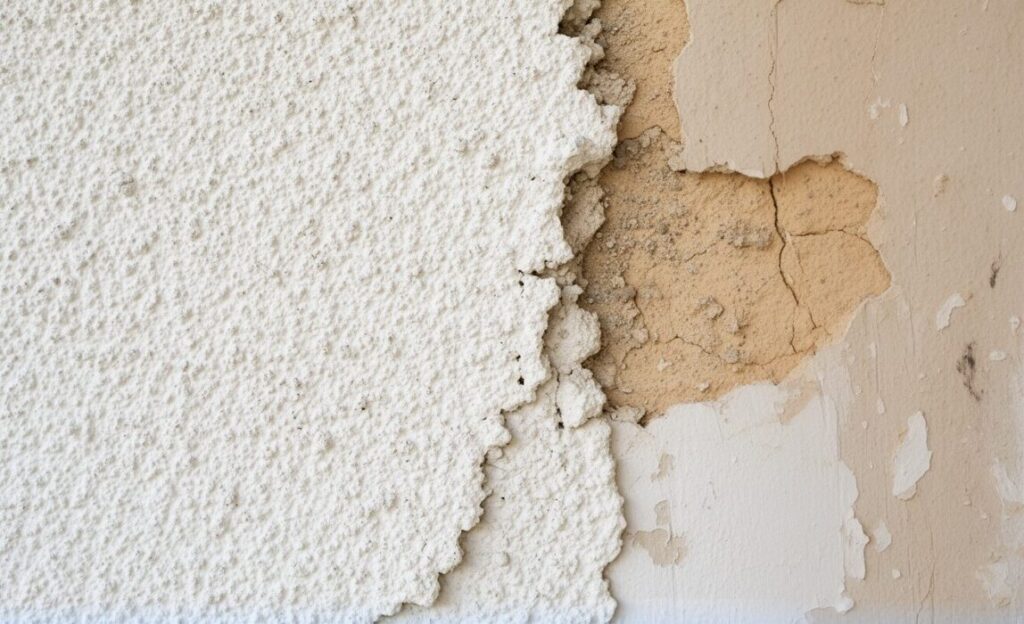
Taking off old stucco – that’s stucco removal. People do this renovation for a fresh look or to stop structural issues. This involves stripping textured stucco from outside walls, or stucco and spackle designs inside. It’s a big job, often needed when stucco flakes, grows mold, gaps, or cracks badly.
Remediation fixes these problems. Sometimes, removing stucco even shows off the original brick underneath, or just updates how the home looks. This can be tricky, needing special tools and methods. It might also uncover damage or hidden issues that then need major repairs.
Safety Measures Before Removing Stucco
Before you pull off any stucco, take some safety steps. Put on personal protective equipment. Check for dangerous stuff – you need to know what hazards might be there, especially around soffit areas. Getting rid of stucco kicks up a lot of dust. You’ll need ways to control it.
Older homes might have lead paint or asbestos in their stucco. You’ll have to test the material and get special certifications to remove it safely. Skipping these steps could harm your health and damage your property.
What Personal Protective Equipment Do You Need?
Removing stucco takes specific safety gear. You’ll need gloves to keep your hands safe from sharp edges and wire mesh. Goggles are a must for your eyes, protecting them from dust and flying debris. Be sure to wear a dust mask; stucco particles are unhealthy to breathe in. If the job is big or you’re using power tools, ear protection is also a good idea.
How to Check for Hazardous Substances in Old Stucco
Old stucco can hide hazardous materials. Check it for lead and asbestos. Homes built before 1979 might have lead paint in their stucco layers; asbestos often shows up in stucco from the 1980s.
If tests confirm these dangers, you’ll need special certifications and removal methods. Mishandling them creates real health risks. For safe, legal removal, think about hiring professional testing and abatement services.
What are the Risks of Removing Stucco in Soffit Areas?
Stripping stucco from soffits creates unique dangers. These spots sit high and are often hard to reach. Working above your head means more falling debris. You need solid scaffolding to stay safe. Getting to these areas is tough; it makes keeping good posture and tool control difficult. This often leads to accidents. Soffit work demands extreme care.
Tools and Equipment for Stucco Removal

Certain tools are needed to remove stucco the right way. Some are for detailed hand work, while power tools make jobs faster. Your choice depends on the stucco type, what’s underneath, and the project’s scale. Picking the right tools avoids damaging the structure below.
Essential Hand Tools for Stucco Demolition
Manual stucco demolition calls for a few key hand tools. You’ll need a hammer and chisel; they’re basic for cracking and freeing stucco, particularly in small or tight spots. A crowbar helps pry off bigger, already loose chunks. To clean leftover stucco from surfaces – like brick or mortar – try a wire brush. It does the job without too much damage.
You can dry scrape and get rid of soft finishes with a metal scraper, planer file, or hook scraper. These tools are vital for careful, exact removal.
What Power Tools Aid Stucco Removal?
Power tools make quick work of stucco removal, especially when dealing with large spots. A pressure washer cleans well, but don’t use it to strip paint off stucco – you could damage the surface. Instead, try chemical strippers for paint removal. Abrasive sandblasters, for instance, can ruin stucco entirely.
Step-by-Step Stucco Removal Techniques
Taking off stucco needs certain methods to avoid damaging the building. The best approach depends on the stucco’s shape and what’s underneath it. For instance, you can use a sledgehammer on solid sheathing. But if you’re working on exterior walls, cut the stucco into squares instead. Every step needs to be done with care.
How to Loosen and Break Up Stucco
Start by lightly hammering a small, hidden spot. This checks how well the stucco sticks, especially on brick. If you’re working on interior walls or resin-based coatings, use a chemical solvent or a special textured coating remover. That will soften the finish and make scraping easier. For exterior stucco, a sledgehammer breaks it from the inside out – this works best with solid sheathing. A rotor hammer also blasts away old stucco. It is useful for buckling or areas that were repaired before.
How to Cut Stucco into Manageable Sections
Working with exterior walls means breaking the stucco into smaller, easier sections. Grab a skilsaw fitted with a diamond blade for this job. Cutting the stucco into 3-foot by 3-foot squares helps a lot with handling and getting rid of it. This approach works well for big areas. It also makes demolition easier to control and moving debris to a dumpster less of a hassle.
How to Pry Stucco from the Wall
Once the stucco is loose or cut, pry it off the wall. Use a crowbar or a hammer and chisel to gently remove these pieces. If the stucco is on wire lath or celotex – a common backing material – prying near a stud helps it come off cleaner. Be careful not to damage what’s underneath, especially brick or mortar. For bigger sections, pry them free and toss them right into a dumpster.
Dealing with Wire Lath During Stucco Removal
Removing stucco often means dealing with wire lath. This mesh is sharp and can cut you, so wear gloves. It also makes the job harder since it’s really nailed down. If you plan to take out the old wire, cut it away carefully to save the wall. Sometimes, crews put new wire lath right over existing stucco for a fresh brown or color coat, or they might attach it to rigid insulation boards.
Removing Stucco from Specific Surfaces
Stucco removal changes a lot based on what’s underneath. Taking stucco off brick, for example, needs a light hand – you want to save that original masonry. Inside walls, though, might need different methods entirely. Every surface has its own problems. You need to consider them all to remove stucco well, without damage.
How to Remove Stucco from Brick Walls
Taking stucco off brick walls needs a careful touch. The goal is always to keep the original brick and mortar safe. This job takes a lot of time and hard work. Bricks and mortar often show damage once the stucco is gone. Extensive repairs, like tuckpointing, then become necessary to save the building.
How to Remove Stucco from Interior Walls
Getting rid of stucco or spackle on inside walls usually means aiming for a smooth final surface. For resin coatings, you will need a chemical solvent or one of those special textured coating removers to soften it. Then, scrape the finish with a metal tool. If it is a plaster-based finish, you might need to dry scrape it with a planer file or a hook scraper.
Rather than taking everything off, you can prime and skim coat right over the stucco to make things smooth. Sanding also works, but that kicks up a lot of dust – be ready for it. The main idea is to get the wall ready for paint or whatever else you plan to do inside.
How to Remove Paint and Textured Coatings from Stucco
Taking paint or textured coatings off stucco is tough. That’s because stucco is abrasive and porous. Scraping with metal tools, for example, can smooth out the stucco surface and even damage it. High-pressure sprayers do remove paint. But they can also hit hard enough to harm the stucco itself.
Most people avoid sandblasting – it often destroys the stucco entirely. Chemical strippers work best for resin-based paints. They soften the paint, cutting down on airborne dust.
If you want a new look without stripping everything away, you have options. Try applying wire lath over the old stucco, then adding a new brown and color coat. You could also fasten rigid insulation boards and put new stucco right over them.
What Drives the Cost of Stucco Removal?
Removing stucco involves several costs. How much you pay depends on the total square footage, how complex the job is, and the specific tools needed. A bigger area will always mean more labor and time. Projects get pricey with wire mesh, brick underneath – a real pain – or hazardous materials. Scaffolding, tarps, and getting rid of the waste also add to the final bill.
When to Consider Hiring a Stucco Removal Professional
A contractor makes sure repairs go well when brick and mortar need big fixes. This also includes full outside renovations like adding onto a kitchen or swapping out windows and doors. They handle execution and weatherproofing – a rain screen system often comes with this work.